

“Vanity of vanities… all is vanity. You kill yourself to get to the grave. Especially you kill yourself to get to the grave before you die; and the name of the grave is ‘success’, the name of that grave is hullabullo boom boom horseshit.”
—Jack Kerouac
The legendary Beat writer Jack Kerouac died on this day, October 21st, 1969.
The final years of his life were marked by the heavy toll of fame after On the Road was published in 1957. Rampant alcoholism, declining health, and withdrawal from the counterculture he helped inspire.
“I'd rather die than be famous,
I want to go live in the desert
With long wild hair, eating
At my campfire, full of sand”
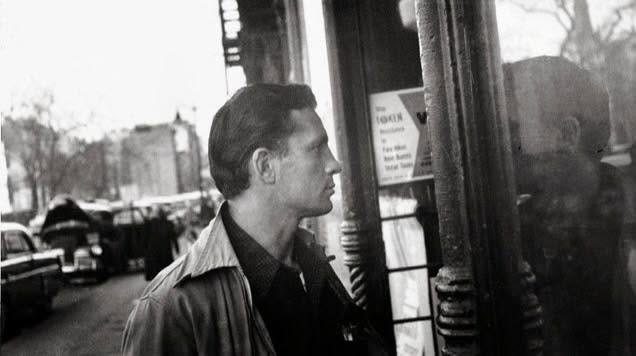
After the sudden success of On the Road, which made him a reluctant celebrity and “King of the Beats,” Kerouac struggled intensely with public attention.
He continued publishing autobiographical works in his spontaneous-prose style (part of what he called the “Duluoz Legend”), including The Dharma Bums (1958), Big Sur (1962, recounting a 1960 breakdown and failed attempt to dry out at Lawrence Ferlinghetti’s cabin in Bixby Canyon), Visions of Gerard (1963), Desolation Angels (1965), Satori in Paris (1966, based on a drunken trip tracing his Breton roots), and Vanity of Duluoz (1968).
By the mid-to-late 1960s, much of his best-known writing was behind him, royalties were modest, and he produced less of lasting note.
"Do you know how horrible it is to be a “famous” writer; I’m writing my new novel and I’m afraid because everybody’s going to read every fucking word and I can’t be myself anymore…" — Kerouac
He mostly retreated from the New York and San Francisco scenes, living much of the time with his mother, Gabrielle (“Mémère”), in places including Orlando, Florida; Long Island; Cape Cod; and eventually St. Petersburg, Florida. He bought a house there in the mid-1960s.
In 1966, after his mother suffered a paralyzing stroke, he married Stella Sampas (a childhood acquaintance from Lowell, Massachusetts, and sister of his late friend Sammy Sampas) primarily so she could help care for his mother; the three lived together.
Kerouac never fully reconciled with or closely parented his daughter Jan (from his brief second marriage to Joan Haverty). He grew increasingly isolated, spending time in local bars, watching TV, and drinking heavily—often starting at midday and continuing with boilermakers or other combinations at a destructive pace.